Service
Utility Shed Construction Built for Daily Work
Straightforward, hard-working utility sheds for mowers, tools, feed and seasonal gear.
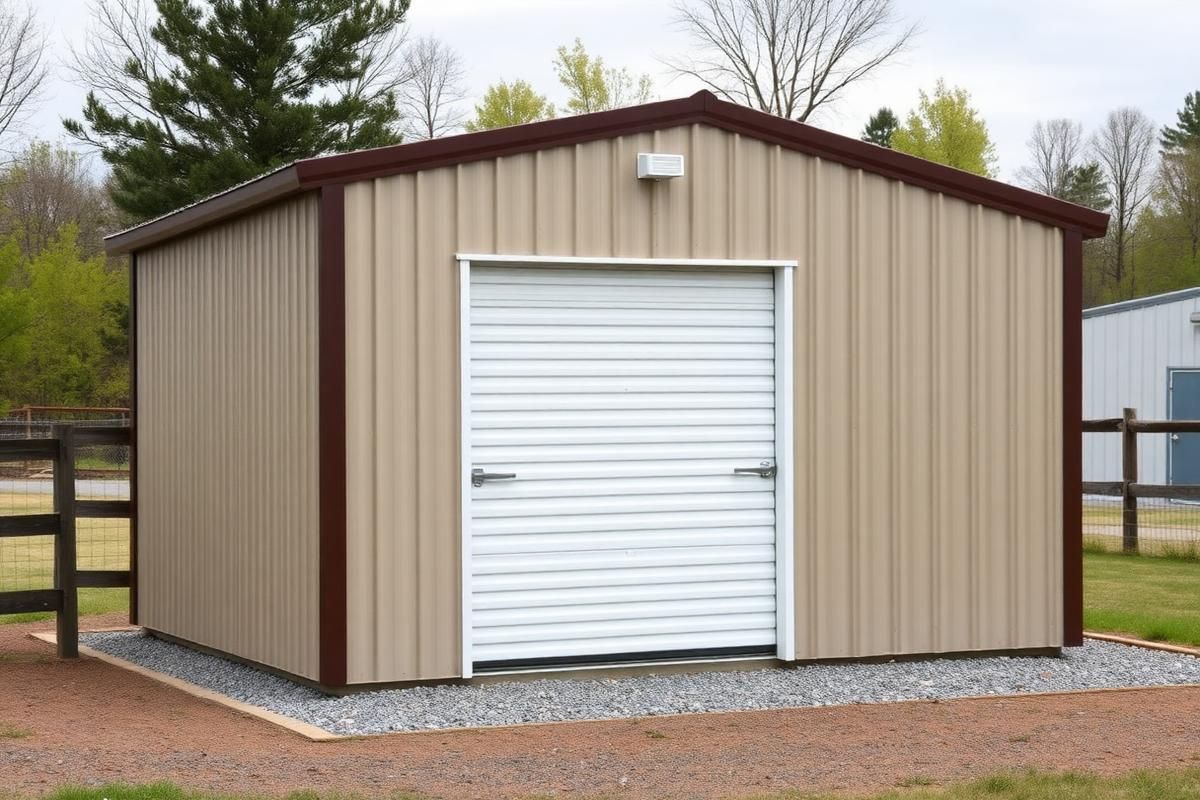
No frills, no wasted money — a tough, sensible building that takes mud, fuel cans, feed sacks and a decade of hard use without complaining.
A utility shed is the workhorse of the property. It is not the building you show off; it is the one that holds the mower, the fuel cans, the fencing supplies, the salt, the extension cords and whatever the season currently demands. That means it should be built for durability and easy cleaning rather than for looks.
What separates a utility shed from a storage shed
Storage sheds mostly hold things at rest. Utility sheds get opened daily, driven into, hosed out and reloaded. We build them accordingly: wider doors, tougher wall surfaces, a floor that tolerates fuel and mud, and layouts that put frequently used items within arm's reach of the door instead of buried in a corner.
Practical specification choices
Floors
For mowers, ATVs and anything with wheels, concrete or a well-compacted stone floor beats a wood deck. Stone is inexpensive, drains, and shrugs off spilled fuel. Concrete costs more but sweeps clean and supports a jack stand or floor jack without deflection.
Walls
Steel siding over framing resists dents from tools leaned against it and does not need repainting. Where you want the ability to screw into any point of the wall, we sheath the interior with plywood or OSB rather than leaving open studs.
Doors
Wide is better. An 8-foot opening handles most walk-behind and riding equipment comfortably; a roll-up door saves the swing space that matters on a tight pad. A separate 36-inch service door means you are not opening the big door for a screwdriver in January.
Ventilation and fuel storage
If gasoline, diesel or two-stroke mix lives in the building, ventilation stops being optional. Ridge and soffit ventilation, plus a low wall vent, keep vapors moving and reduce corrosion on tools. Store fuel in approved containers, away from anything that produces a spark, and keep the shed itself a sensible distance from the house.
Layout ideas that pay off
- Hang long tools vertically on a French cleat rail; it clears floor space instantly.
- Keep a 3-foot clear lane straight from the main door to the back wall.
- Put shelving on the wall with no door and no window, and keep the shelf depth to what you can reach.
- Leave a corner for wet or dirty items so mud does not migrate through the whole building.
- Wire in one bright overhead fixture and a couple of outlets, or at minimum frame and rough for them.
Site placement on rural and semi-rural property
Utility sheds get the most benefit from a firm, dry approach. On farm properties around Utica, Calhoun and Whitesville, we usually place them near the existing gravel drive so the mower or tractor is not crossing soft turf each time. Elevation still matters: the pad goes above grade, with the ground sloped away, and a stone apron outside the door prevents a mud pit forming exactly where you walk.
Cost considerations
Utility sheds tend to be the best value per square foot in our lineup because the finishes are simple. The budget goes into structure, doors and floor rather than trim details. The largest variables are concrete versus stone, door type and quantity, and whether the site needs grading. For a broader look at pricing, see our shed cost guide.
Utility Shed Construction: common questions
Can I store fuel and chemicals in a utility shed?
You can, with good ventilation, approved containers and sensible separation from ignition sources and from your home. Tell us during design so we can specify appropriate venting.
Should I choose a roll-up door or swinging doors?
Roll-up doors save exterior swing space and seal well; swinging doors cost less and let you open the full width for awkward loads. Both work — it depends on your pad size and how you load.
Is a concrete floor necessary?
Not necessary, but valuable if you will be doing maintenance work inside, rolling heavy equipment or washing the floor down regularly.
Can a utility shed be added onto later?
Yes. If you tell us at the design stage, we can frame one gable end for a future lean-to or extension so the addition ties in cleanly.
Ready for a number? Call 270-277-1669 or send your project details. We build across Owensboro and western Kentucky, and every quote is written, itemized and free.