Service
Farm & Agricultural Sheds for Western Kentucky Operations
Hay, implement and livestock-adjacent structures sized for western Kentucky farm work.
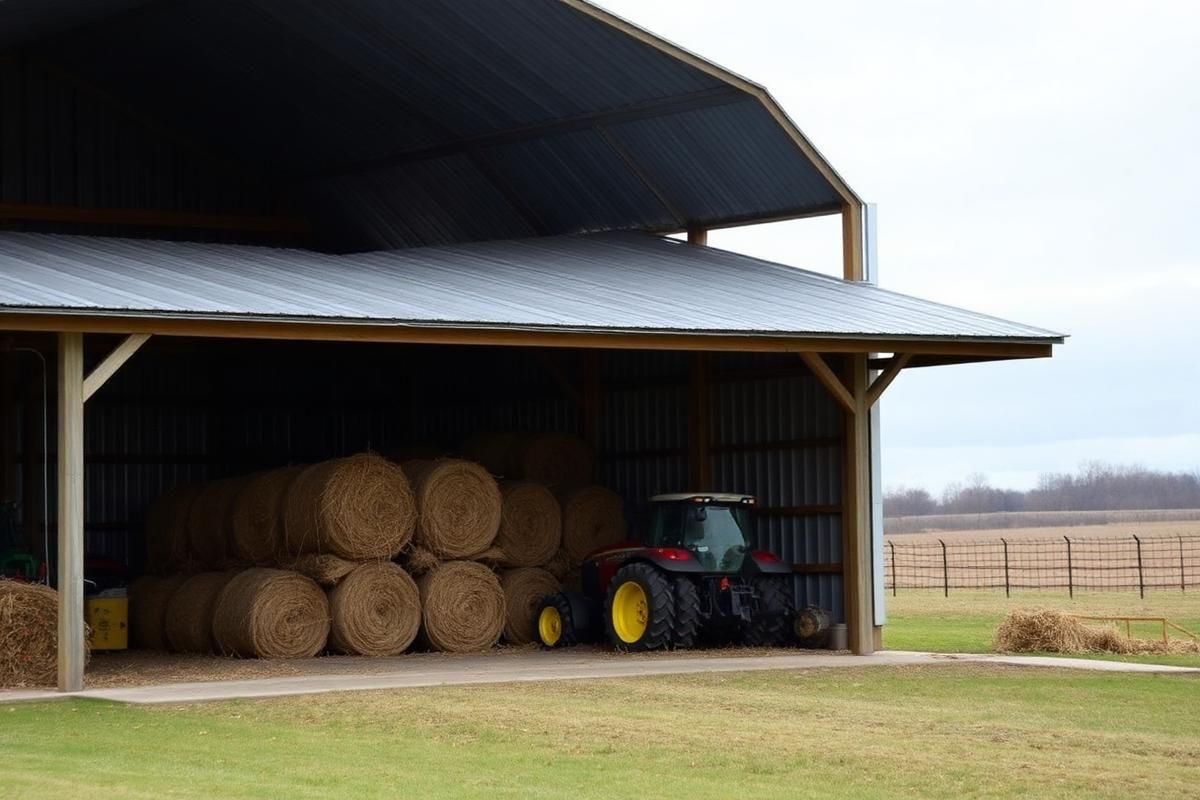
Hay under roof, implements out of the weather and enough clearance to work — built by people who understand a working farm cannot shut down for construction.
Agricultural buildings earn their keep or they are a waste of ground. Around Daviess, Ohio and McLean counties, that usually means covered hay storage, implement bays that keep equipment out of the sun and rain, and enough eave height to work under without ducking a loader arm.
Hay storage that actually protects the crop
Round bales stored outside lose a meaningful percentage of their dry matter to weather every season, and the loss concentrates in the outer layer where the nutrition is. A covered hay shed pays for itself over time, but only if it is built right for the job:
- Eave height generous enough to stack two or three high and still fit the loader.
- Open bays on the prevailing downwind side for airflow, with the closed wall facing the weather that drives rain.
- Elevated stone floor so ground moisture does not wick into the bottom bales. This is the single most skipped detail we see on existing sheds.
- Wide bay spacing so a tractor and bale spear can back in and out cleanly.
Implement and machinery bays
Sun and rain are hard on hydraulic hoses, seals, tires, wiring and paint. Covered storage measurably extends implement life and makes maintenance more likely to happen, because nobody wants to grease a planter in a downpour. When we lay out implement bays, we work from your actual equipment list: folded widths, transport heights, hitch lengths and turning room in front of the building.
Post-frame construction and why it suits farm work
Post-frame building gives you clear interior spans without posts in the way, tall doors, and the ability to enclose part of the building while leaving other bays open. It also handles expansion well — adding bays or a lean-to later is straightforward if the original design anticipated it. See our Pole Barn Construction Guide for how the system works.
Site and drainage on farm ground
Farm sites bring their own considerations: the building should sit where it drains well and where the approach stays firm when you need it in a wet March. We look at how equipment will route in from the lane, whether the loaded feed truck can turn around, and how far the site sits from the existing electric service. Placing a shed downhill from a barnyard means dealing with runoff you did not create; a little grading and a diversion swale solve it if it is addressed in the design.
Ventilation for livestock-adjacent and equipment buildings
Air movement matters differently depending on use. Equipment and hay want dry, moving air to prevent condensation dripping onto steel or bales. Buildings adjacent to livestock areas need substantially more air exchange. Ridge venting, eave intake, open bays and, where appropriate, a taller sidewall all contribute.
Planning, permits and utilities
Agricultural buildings are treated differently from residential accessory structures in many Kentucky jurisdictions, and requirements vary by county and by whether the structure is genuinely agricultural in use. We help you understand what applies before ordering material. If you want lights, an outlet for a battery charger or water for equipment washdown, plan the trench route now rather than cutting into finished stone later.
Farm & Agricultural Sheds: common questions
How tall should a hay shed be?
Enough clearance to stack your bale configuration and still operate the loader comfortably — many operations want 16 feet or more at the eave. We work from your equipment's actual lift height.
Can you build open-sided implement sheds?
Yes, and they are one of our most common farm projects. Open bays with a closed weather wall are cost-effective and give excellent airflow.
Do agricultural buildings need permits in Kentucky?
It varies by county and by the building's use. Genuinely agricultural structures often follow different rules than residential accessory buildings. We help sort out what applies to your parcel.
Can we add on to the shed later?
Absolutely, and it is far easier if we know now. Designing one end for future expansion costs little and saves considerable rework later.
Ready for a number? Call 270-277-1669 or send your project details. We build across Owensboro and western Kentucky, and every quote is written, itemized and free.